Are you the proud owner of the Human Design 3/6 profile? Then I would like to inform you in this blog post about how your profile is made up and how you can use your profile to develop naturally in your professional life. Have fun reading!
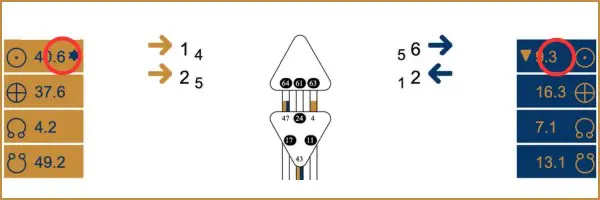
The profiles in Human Design are derived from the six lines of the basic structure of a hexagram from the I Ching, the Book of Changes (see illustration below). There are a total of 12 combinations of these lines that make up the profile. For you, it’s lines 3 and 6. In your Human Design Chart, you’ll also find your two lines as numbers after the dot on your conscious sun (personality) and your unconscious sun (design).
Characteristics of the lines
Some interesting character traits can be deduced from your profile. You are aware of the properties of the first digit. You are less aware of the characteristics of the second digit, especially if you have not yet reached the second half of your life. The Human Design 3/6 profile also has interesting characteristics that you will certainly recognize in your professional life.
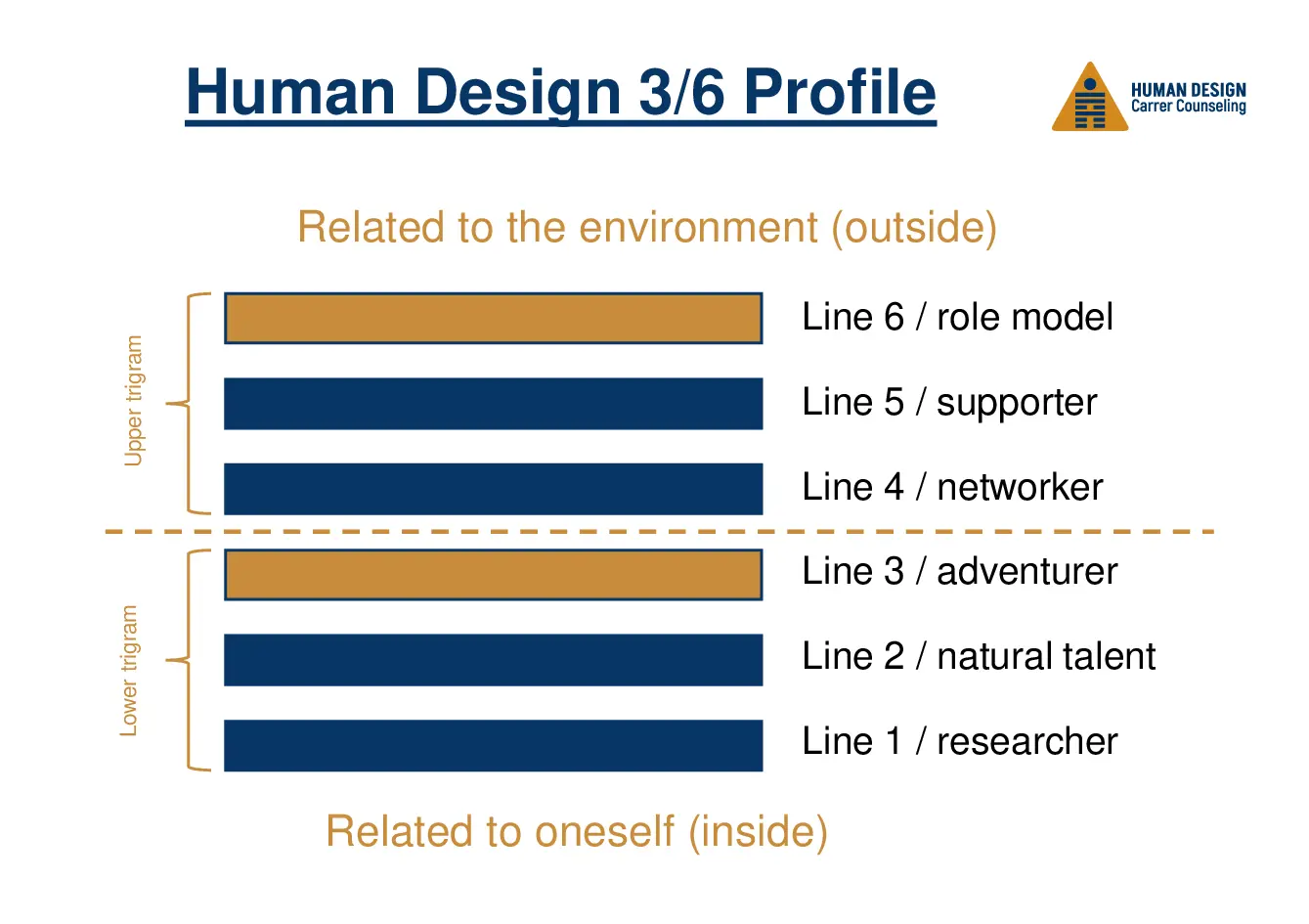
In traditional Human Design, the symbols shown in the diagram are assigned to the six lines. These characteristics allow us to draw interesting conclusions about a person’s profession. Between the first three and the second three lines (from bottom to top), there is a change in the way a person learns in life. This is more about learning for life and not about how one learns at school, vocational school, or university.
How you discover life
With the first three lines, you have a learning style that is related to yourself. It is a self-centered way of learning. So if you have a profile with line 1, 2 or 3, you are discovering life in a self-centered way in relation to this line. With lines 4, 5 and 6, you have a learning style for life that connects you with your fellow human beings. Profiles can be made up of two self-related lines, two environment-related lines or a mix of self-related and environment-related lines.
The Human Design 3/6 profile
With your conscious third line, you discover solutions through experimentation. In addition to experiencing success, you also use the trial-and-error principle to find solutions that don’t work for you. This is your way of making progress in your working life. You will also meet people who support you on your journey of discovery, but who you can also reject if they are no longer useful for your path.
The unconscious sixth line gives you a bird’s eye view of your life and the world of work. Authenticity is the key to your personal development opportunities. You are a role model for your colleagues and business partners because you have gained a certain wisdom through your wealth of experience. This enables you to contribute to significant changes in organizations.
“I have not failed. I’ve just found 10,000 ways that don’t work.”
Thomas A. Edison
Your personal Human Design
MoreFurther characteristics of your Human Design 3/6 profile and many other aspects of your Human Design Chart can be found in your written Human Design analysis or in a 1:1 Human Design consultation.

FAQ: Questions about Profile 3/6 in Human Design
What does the Human Design 3/6 profile say?
The conscious third line helps to discover solutions through experimentation, to deal with trial and error and to find one’s own path in working life. The unconscious sixth line promotes authenticity and a bird’s eye view of life, which enables wisdom and contribution to change in organizations.


0 Comments